Disclaimer:
I am not an expert and feel free to correct me (nicely) on any of this. The podcast is an evolving beast and I will happily revisit any of the ideas and texts we look at.
This is taken from this week’s episode of The FrankenPod.
Listen via youtube
Before our podcast release next week I thought it might be a good idea to have a bit of a chat about Gothic literature and what exactly that entails. I am not assuming that everyone knows or doesn’t know about the gothic genre and this certainly won’t be a deep dive because I am simply not qualified. This is just to define the parameters of the initial genre we will be focusing on with Frankenstein and The Picture of Dorian Gray.
First up we need to acknowledge that the gothic genre is super problematic. There are stories that give a strong voice to people of all shapes, sizes, gender identifications, sexual orientations and nationalities but this progressiveness is a pretty recent development. Gothic literature can be racist, homophobic and is frequently classist and misogynist. Whilst we could dismiss these issues as being products of the time in which they were written I think it is important that we are aware of the problems in the things we love and to acknowledge them. The only way we can move forward is to understand the issues of our past. Frankenstein is classist, misogynistic and racist. It is my favourite novel of all time, but I completely acknowledge it’s flawed.
Let’s get into my barebones overview of Gothic Literature.
Particularly popular in the 18th and 19th century, Gothic literature typically draws on a spectre of evil
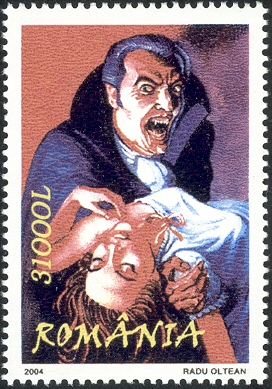
from the distant past that threatens to reach forward and destroy the present. Bram Stoker creates a particularly threatening creature who oozes ancient evil in Dracula. With vampire myths existing in every culture, some tied to the bible, some tied to ancient Egyptian mythology Bram Stoker had a wealth of ancient evil to draw from. His Count is descended from Attila the Hun and himself is a spectre of ancient or at the very least medieval evil, being virtually immortal. He has been around for centuries, but in Stoker’s narrative, he ventures into Victorian industrialised society to act all creepy around the ladies of London.
The Corruption of the Innocent
The predatory sexuality of Dracula is one of the most blatant examples of the corruption of the innocent, a trope that is revived again and again. He preys on young vulnerable and virginal women in the same way that monsters of his kind will again and again in the novels we cover. But the innocent does not have to be a young virginal woman. The good Doctor Jekyll is corrupted in The Strange Case of Doctor Jekyll and Mr Hyde, the innocent Dorian is corrupted by his own vanity, Sir Henry and a supernatural lack of accountability, but in the 18th and 19th centuries, it is usually a girl or a woman who gets shortchanged. Even in contemporary gothic tales, the innocent vs. the beast is trotted out regularly, look at Buffy and Twin Peaks. I promise this will not become a Twin Peaks podcast but that won’t be the last reference to the series.
Locked Doors and Secret Passageways
Often gothic literature features mysterious castles, decrepit houses or monasteries. Horace Walpole’s novel The Castle of Otranto (1764) is commonly cited as the first gothic novel, which is a whole ridiculous story that we will get to in another episode. The Castle of Otranto has a lot of the features that would come to be prevalent in the gothic novels that would come after it; an old castle, a family curse, the corruption of the innocent, the supernatural and the sublime.
The Other Goths
The word Goth does allude to a mysterious Scandinavian people who come into the verifiable historical record suddenly in the first century A.D. and this part of the story I am horrifically underqualified to talk about, even more than everything else I have been talking about. If you know a lot about the Goths, the Visigoths or the Ostrogoths please get in touch. Absolutely willing to revisit this! All I know is that as a teenage goth it was a source of very real and deep disappointment that the goths were not pale skinned eyeliner wearing robed people with black hair lounging about nonchalantly waiting for The Cure to be formed.
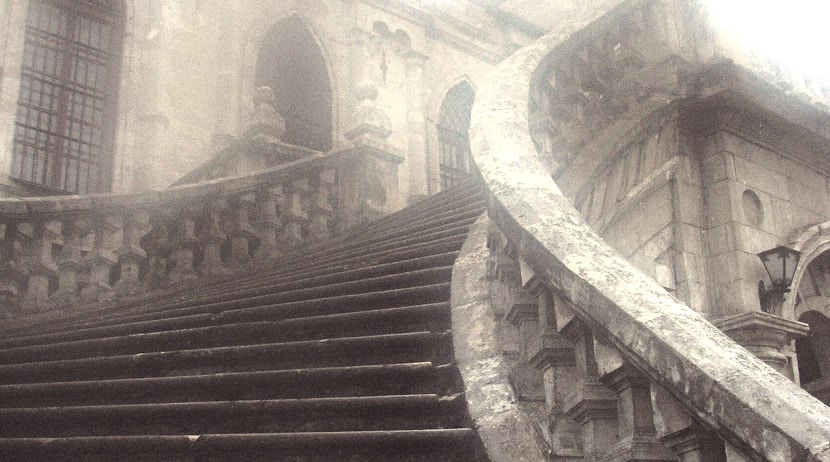
Dramatic Architecture
The Gothic became a pejorative term that was used to dismiss architecture as ugly or barbaric which is a little harsh not to mention more than a touch racist. I also know basically nothing about this aspect of the gothic so again… if you know your way around gothic architecture please get in touch. Gothic literature has a lot more to do with the emergence of the goth subculture as we know it today than the Germanic Goths and gothic architecture.
This architectural notion of the terrible, dramatic and brutal has carried over into the gothic as it pertains to literature. With gothic plots being frequently brutal and dramatic in their content. Gothic literature also blurs the lines between the natural and the supernatural.
The Indefinable Threat
The gothic does not require a ghost or a ghoul but needs an analogous threat. In fact, some of the most ambiguously supernatural gothic novels are the most troubling. Oscar Wilde’s protagonist does not have to wrestle with a literal physical monster, but with his own bargain with a malevolent force and we never conclusively find out if the governess of Henry James’ Turn of The Screw (1898) is actually experiencing a haunting or a psychotic break.
Detective Fiction
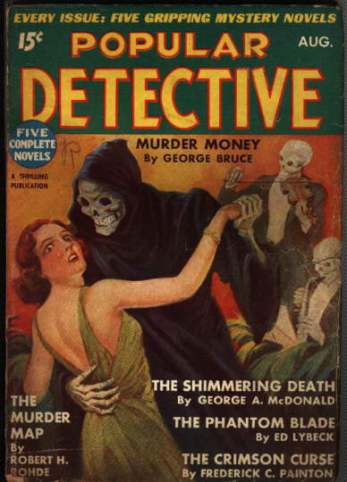
Stemming from the romantic supernatural gothic novel is the detective novel which dabbles in the macabre and the mysterious. These stories might start with a supernatural interpretation, as in the Sherlock Holmes novels, and a shown by the genius detective to be wholly natural, however improbable. The blurring of the gothic and the detective novel is particularly prevalent in The Hound of The Baskervilles by Arthur Conan Doyle, in which we get an appearance of the moors which feature so heavily in gothic fiction, they are like naturally occurring labyrinthine castles full of mystery and unpleasant surprises.
Gothic Film
The gothic film genre is closely tied to horror as it often features a lot of evil, death and destruction, however, it is also closely tied to the genre of period drama as the movies that draw inspiration from the classic gothic novel often keep their narratives within the same time and space as the original narrative. Most of the films we will focus on will have a Victorian or Vintage flavour, but the neo-gothic and gothic noir film has moved the gothic movie into the city and the modern world so there is a rich vein, no pun intended of material to work with.
So what makes Frankenstein gothic?
Well aside from the cliché that it happened on a dark and stormy night. Victor Frankenstein is beholden to a deep ancient desire to create life from whole cloth. The Doctor’s drive to emulate god has a lineage tracing back to ancient Greece. Mary Shelley even renders the curse of the doctor explicit in the title of the novel Frankenstein, or the modern-day Prometheus. The Prometheus myth is a huge thing to unpack so I might have to do that another time. The creature of the novel is not born of God, so while he is a creature of science and consequently science fiction he is also a supernatural innocent that seeks to find his way in the world. There is the corruption of the innocent, death and the fall of a great noble family.
So what do you ideally need for a gothic novel or film? Not all novels will have all these but these are the factors to look out for…
The Gothic Text Wish List
□ Death
□ Mystery
□ A Haunting
□ A Curse
□ A Challenge to the conventional
□ An Artefact imbued with magic or supernatural properties
□ The Corruption of the innocent
□ Creepy architecture
□ Preferably a labyrinth of some kind
□ And an Ancient Evil
*Bats and ambiguous shadows optional
I’ll see you next week with Brent to compare the 1931 movie Frankenstein and the 1818 novel in which we officially apply the concepts of galvanism to the unsuspecting creature that is our podcast.
How could this possibly go wrong?
You can watch the fall out from this act of hubris in real time @thefrankenpod on twitter and thefrankenpod.wordpress.com has all the resources I was diligent enough to include.
In the meantime hit up Project Gutenberg and Librivox for a free copy of Frankenstein and any other gothic tales in the public domain.
Resources
-
Smith, Andrew. Gothic literature. Edinburgh University Press, 2007.
-
If you want to find books over 100 years old or thereabouts you can probably find it on Gutenberg Project Free Books outside of the Public Domain on Project Gutenberg
-
My copy of many gothic texts discussed are drawn from: “A Gothic Treasury of the Supernatural: The Castle of Otranto; Frankenstein: The Strange Case of Dr. Jekyll and Mr. Hyde; The Picture of Dorian Gray; Dracula; The Turn of the Screw” 1981
-
Other research is drawn from the Macquarie University and Jstor


 Morgan Writes
Leave a reply to 10 Romantic Gothic Stories You Should Read Before You Run Hysterically Into the Moors Never to be Seen (Alive) Again – The FrankenPod Cancel reply